
How Artificial Intelligence is redefining careers in clean energy
13 million jobs created but a 317% AI growth could redefine the future of work

Over the past few decades, the transition to a greener economy has created many new job opportunities. Still, as Artificial Intelligence (AI) gains momentum and offers immense potential, there is a growing concern that it may lead to unpredictable job losses.
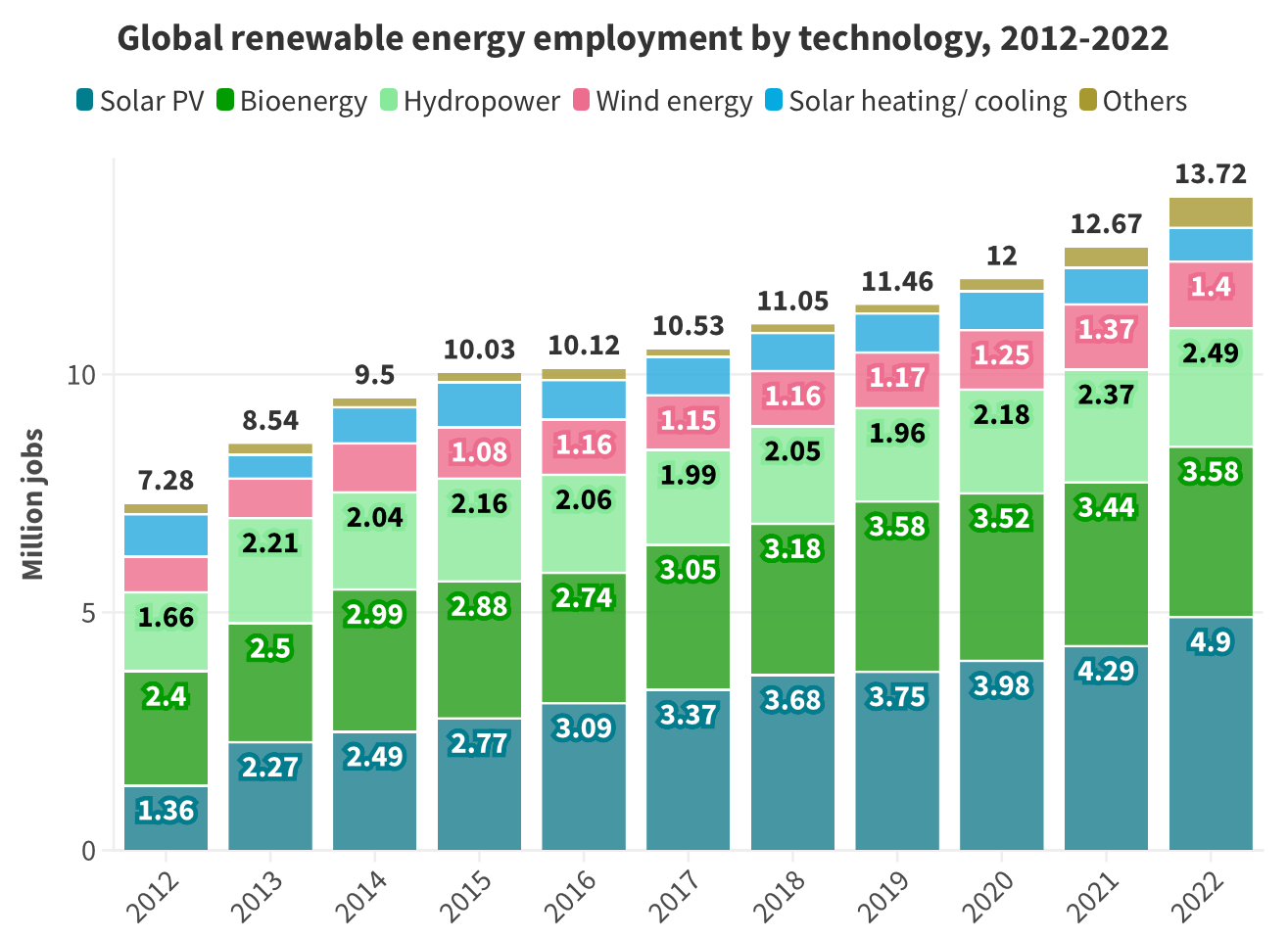
From solar installers to energy auditors, the clean energy sector has become a major employment engine. According to the International Renewable Energy Agency (IRENA), more than 13 million people were employed in the renewable energy sector globally in 2022 (Figure 1), up from approximately 12.7 million in 2021. Solar and bioenergy accounted for more than half of these jobs.
The credit of this job growth goes to several factors. For example, strong net-zero commitments from major economies, such as the EU, the U.S., and China, provided space to create opportunities.
In addition, the rise of ESG-driven corporate strategies, the expansion of rooftop solar, microgrids, and battery storage created jobs in installation, maintenance, and system monitoring.
Even so, this growth has not been evenly distributed, both across the world and within sectors. Many developing regions still face limited infrastructure and skills shortages, preventing them from fully participating in the green transition.
As AI enters the picture, these discrepancies have been intensified. The areas and sectors already lagging in renewable energy development are being hit hardest by technological gaps.
Read: Renewable energy jobs have promising prospects but face skills shortage
AI enters the clean energy workforce
The future impact of AI is still immeasurable, but from what we have seen so far, it is now transforming the way energy systems are built, managed, and optimized. But as AI’s role extends beyond improving efficiency, it also requires humans to update their skills to work effectively with it.
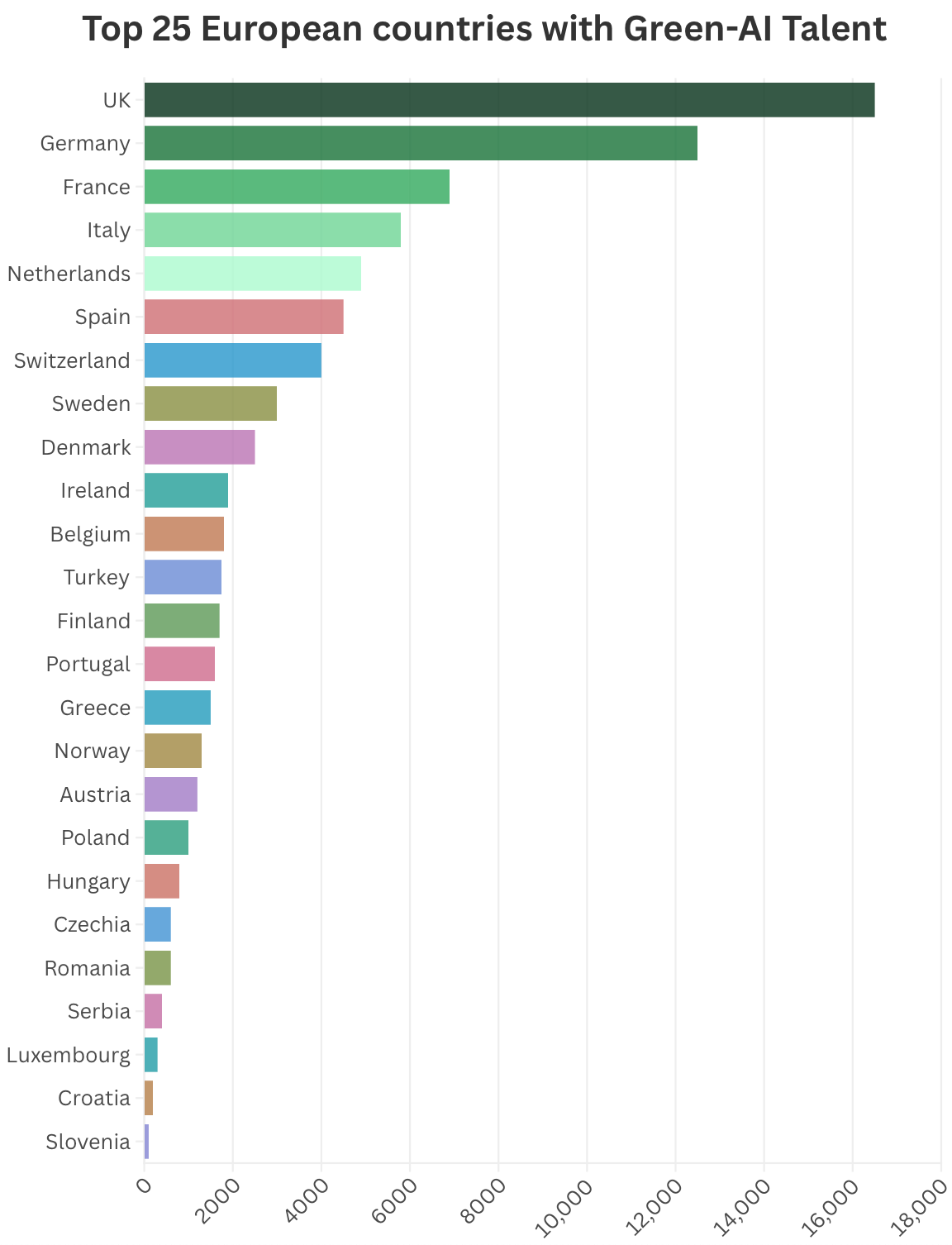
Figure 2 shows that some countries are catching up quicker than the rest. According to the Interface analysis, the UK, Germany, and France are the top three countries with the highest number of green-AI talent. The dataset is from September 2025, and the report was published in February 2026.
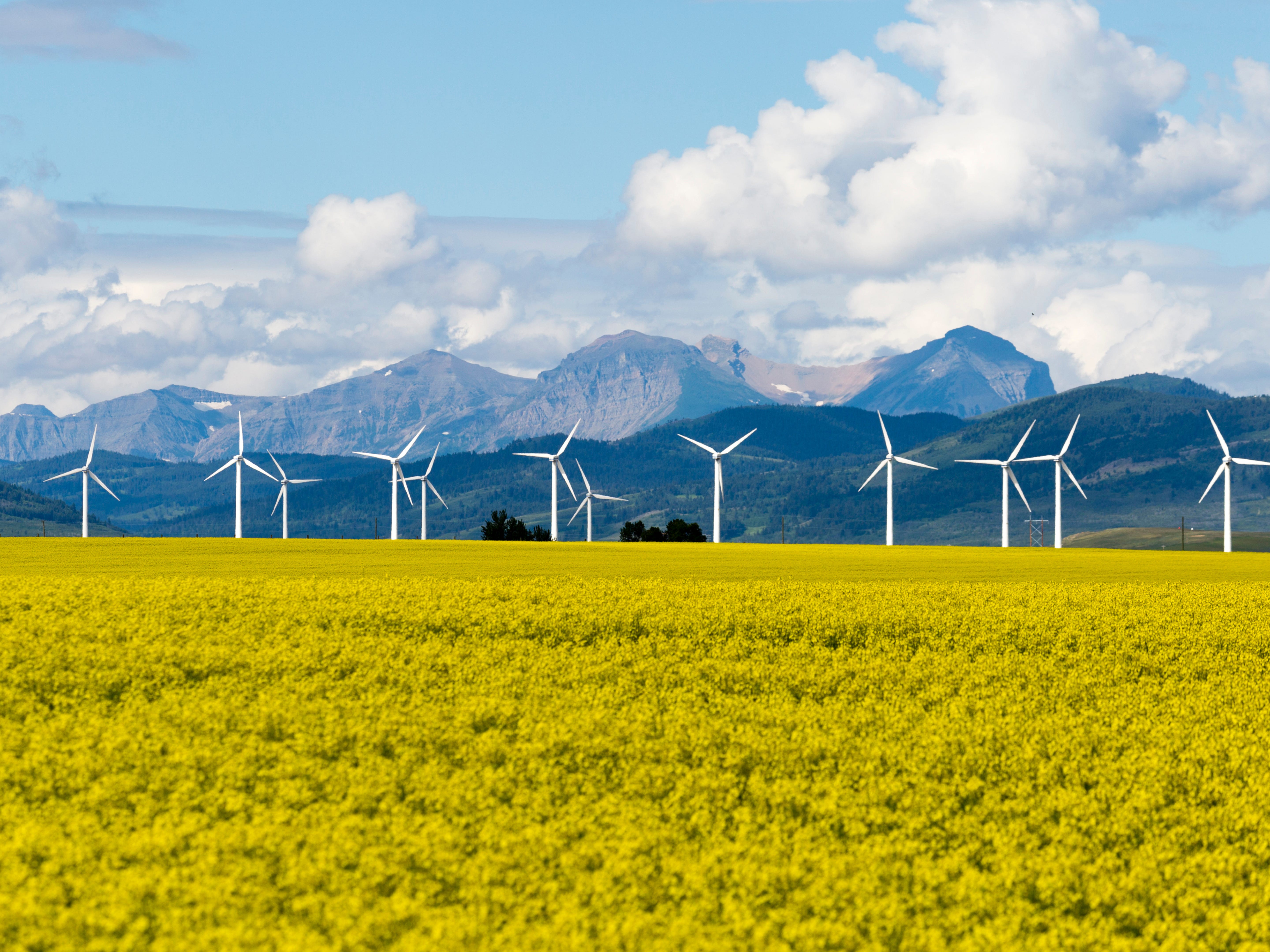
AI has many advantages. For example, in wind energy, drones combined with AI are replacing manual inspections, identifying faults faster and more accurately. In electric vehicles and battery storage, it is optimizing charging networks and managing energy flows in real time.
Even in areas like climate finance and carbon accounting, AI is enabling real-time emissions tracking, climate risk modelling, and ESG reporting. As a result, entirely new career paths are emerging at the intersection of finance, data, and sustainability. In this way, the clean energy workforce is evolving from manual and mechanical roles to digital and analytical ones.
This AI-driven evolution goes beyond jobs to fundamentally transform how renewable energy works. One of the biggest criticisms of wind and solar power has always been that energy is only generated when the wind blows or the sun shines.
By improving forecasting, optimizing energy flows, and predicting system failures, AI is making renewable energy more reliable and efficient.
AI in energy market
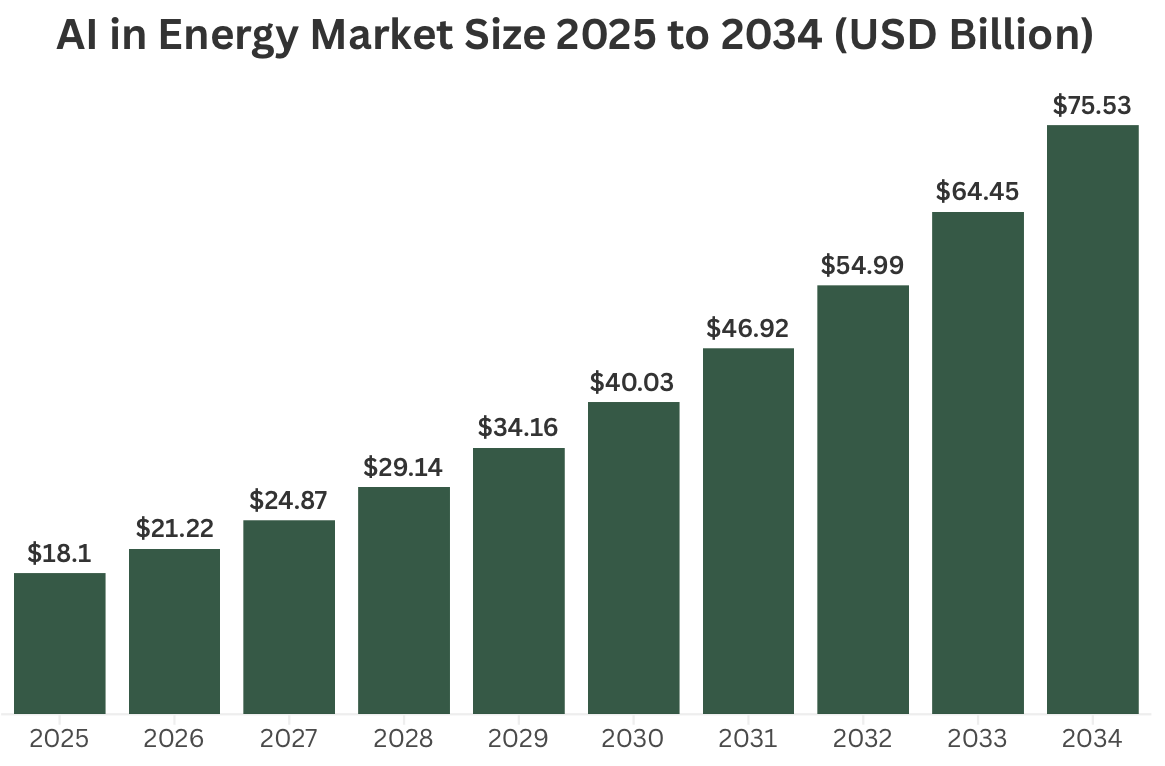
The AI in global energy market is projected to grow rapidly in the coming years, driven by increased renewable energy integration, the expansion of smart grids, and rising demand for efficiency and cost reduction.
According to Precedence Research, the market size of AI in energy could reach USD 46.92 in the next five years (Figure 3). By 2034, the market size is expected to increase by 317.3% in comparison to 2025. It shows that the future of clean energy lies not just in physical infrastructure, but in digital infrastructure as well.
Some countries, such as Denmark and the UK are already planning to integrate AI into their energy systems. Their observation includes the following key areas where AI could be very useful:
Energy generation: Predictive maintenance, performance optimization, and forecasting
Grid management: Smart grids that respond dynamically to supply and demand
Energy storage & EVs: Real-time optimization of batteries and charging infrastructure
Climate finance: AI-driven risk modelling and carbon tracking
Read: Sustainability jobs: 42 million renewable energy jobs by 2050
There are opportunities, but there is also tension
AI is creating new opportunities, but it is also introducing friction into the labour market. The demand is growing for data engineers who can interpret complex environmental data, and professionals who can combine energy knowledge with digital tools.
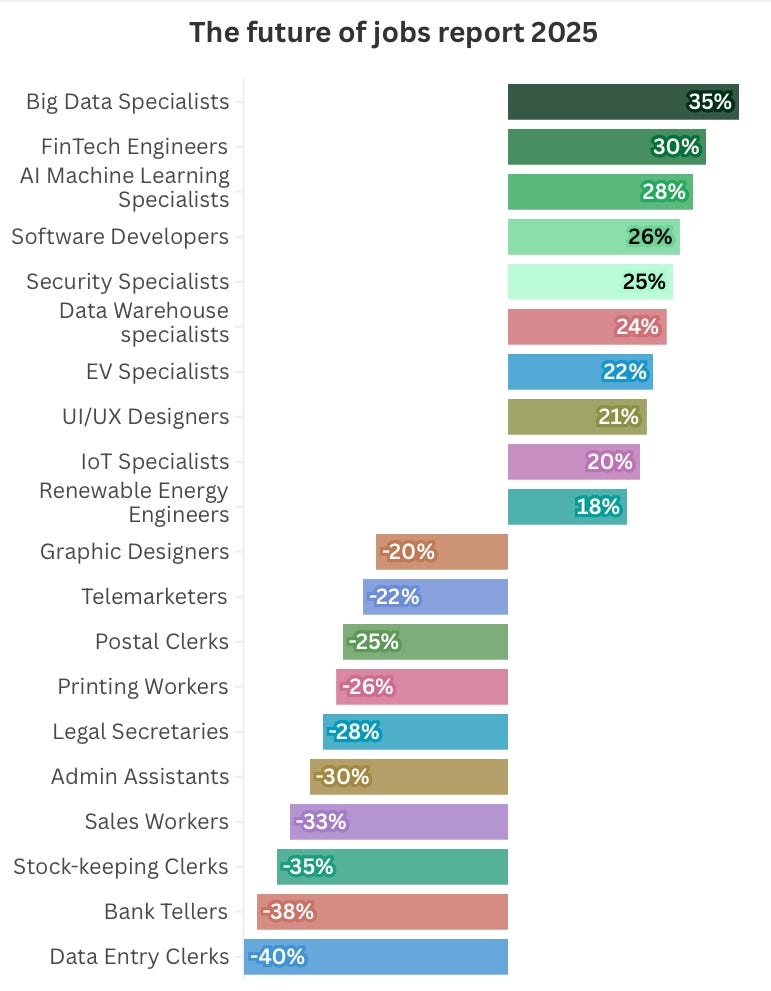
On the other hand, automation is beginning to replace certain repetitive tasks in installation, inspection, and maintenance. Entry-level roles, which are often the gateway into the sector, are becoming less accessible. Figure 4 shows the data analysis done by Fathom on how the job market will shape up by 2030. The market in big data specialists will go up by 35% compared to 2025.
The skills gap is a problem
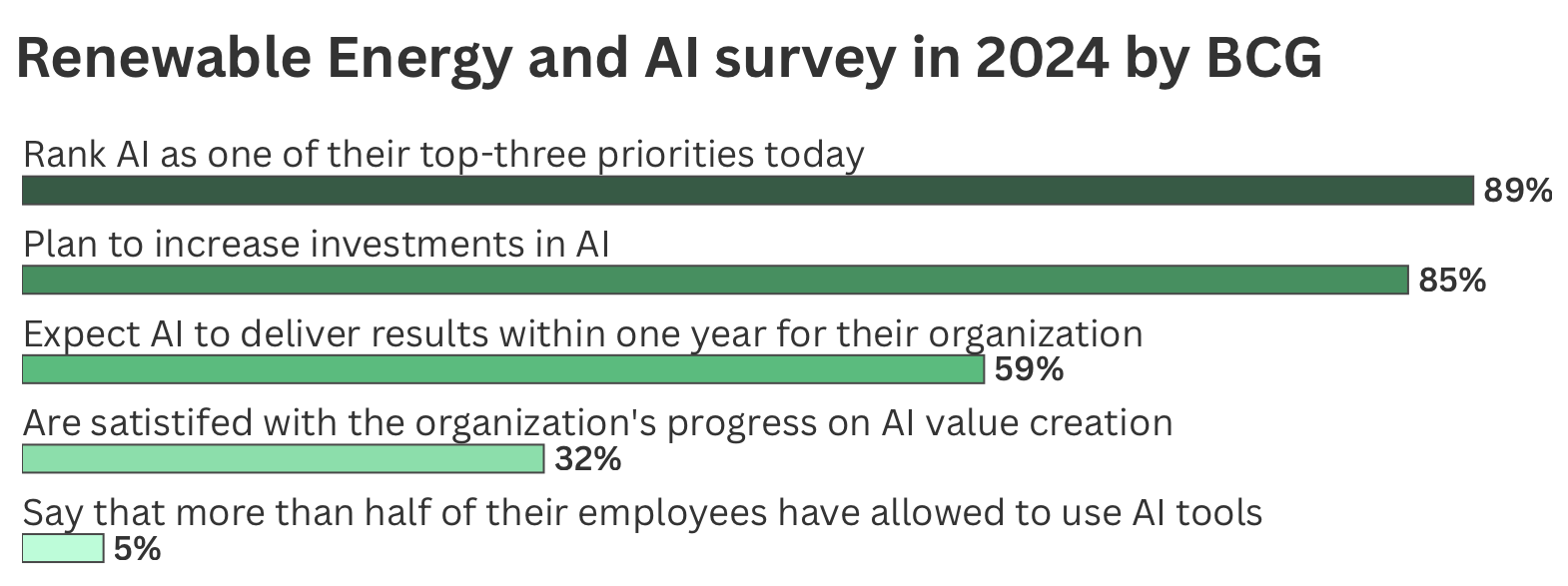
Despite its potential, many energy companies are still struggling to fully implement AI. According to a BCG survey in 2024, about 85% of the leaders are planning to increase investments in AI although the clear timeline is not disclosed (Figure 5). Interestingly, only 32% leaders are happy with their companies’ progress on AI value creation.
As the clean energy workforce with AI is entering a new phase, it will be more technical, more competitive, and more interconnected. In regions pursuing a “twin transition” (digital + green), such as Europe, demand for workers with both AI and environmental expertise is rising rapidly.
By 2050, global employment in renewable energy and energy efficiency could reach 42 million jobs. While there are challenges of poor data quality, outdated infrastructure, regulatory complexity, and lack of organisational change, the biggest challenge is not the technology but the talent.
Read: Green skills gap predicted to affect 7 million workers by 2030
Read: Chief Sustainability Officers: women are more favorable for the role
Green jobs are no longer just green but are becoming digital, data-driven, and AI-powered. The renewable energy companies must shift from experimenting with AI to building AI-native organizations, investing not just in algorithms but also in the skills of the workers.
If companies are open to these challenges, AI can help the industry operate more efficiently, match supply and demand, engage customers, and support the global energy transition. AI might actually be the answer to transitioning to a low-carbon economy.